
6 Costly Financial Mistakes to Avoid as a Travel Nurse
If you’re a Canadian nurse working travel contracts in the U.S., you’re in one of the most financially powerful positions of your career – let’s make sure you’re maximizing your money instead of losing thousands to common cross-border travel nurse financial mistakes.
If you’re not yet an international travel nurse, but curious about becoming one, read my full guide on How to Become a U.S. Travel Nurse as a Canadian RN.
In my many years of travel nursing, I’ve dealt with terrible currency exchange rates, paid for unnecessary benefits, and missed out on free money through a 401(k). I learned the expensive way so that you don’t have to! Keep reading to learn how to avoid the most common costly money mistakes as a travel nurse.
1. Not Hiring a Cross-Border Tax Professional for Travel Nurse Taxes
Filing taxes is confusing enough… but add in working in two countries, tax treaties and rules, Canadian RRSPs vs. U.S. 401(k)s, and suddenly travel nurse taxes get complex fast.
For my first year working U.S. travel nurse contracts, I made the mistake of hiring two accountants – one in the U.S. and one in Canada – not realizing there are professionals who specialize in cross-border travel nurses. This oversight cost me hundreds in missed tax breaks, bad advice, and double accounting fees.
Then I found TaxScrubs – a cross-border accountant team that specialize in travel nurse taxes. I cannot recommend them enough and here’s why:
- They file everything seamlessly in both the U.S. and Canada
- They’re available year-round, not just during tax season
- Their website makes the entire process simple and easy
- Hasib’s wife is a travel nurse so he has a deep understanding of how to save you the most money
Check out TaxScrubs website here and let them know I sent you! My wallet and I sure wish I found them at the beginning of my travel nursing journey.

2. Losing Money on Currency Exchange Fees
Most Canadian travel nurses unknowingly lose money when converting their USD income to CAD. I now realize I lost around $10,000 over the years through currency exchange…
For a few years I used RBC’s cross-border banking bundle and converted my USD to CAD within the bank. It seemed convenient and simple, especially since RBC advertises “no exchange fees”. But there’s a catch.
Banks make their money through exchange rate spreads, so even without a visible fee, the rate you receive is worse than the market rate – meaning the bank is sneakily taking a cut. Over time, this can add up to thousands of dollars lost.
Luckily, there is a platform that solves this problem (and many other problems) call Wise.

Wise is perfect for travel nurses, nomads, and anyone who earns money in multiple currencies because:
- Wise allows you to hold multiple currencies in one account
- Functions like a U.S. bank account, allowing you to receive direct deposits in USD from employers and transfer USD to other accounts (ex: paying for rent)
- No foreign transaction fees in most countries
- Easily convert money at exchange rates that are much closer to the real market rate, saving you about 3-5 cents per dollar transferred… so if you transfer $50,000 USD, saving even 4 cents per dollar means keeping an extra $2,000 in your pocket instead of the bank’s. That’s crazy!
Wise is free to sign up, guaranteed to save you money, and make your banking flow so much easier.
3. Not Contributing to a 401(k) With Employer Match
One of the most overlooked financial mistakes as a travel nurse is skipping your employer’s retirement account and match. In Canada we have RRSPs, while in the U.S. the equivalent retirement account is a 401(k). Although they have different names, they function in very similar ways.

For four years of U.S. travel nursing, I didn’t enroll in my employer’s 401(k)… I want to throat punch my past self for that!
I took bad advice from an accountant that contributing to a 401(k) would complicate my Canadian taxes and that I probably wasn’t even eligible anyways. Turns out that was a lie and caused me to miss out on so much free money. By far my biggest financial mistake as a travel nurse.
The truth is that many Canadian travel nurses working in the U.S. are eligible to contribute to a 401(k) through their employer, and your contributions can even reduce your taxable U.S. income.
Employer 401(k) match means if you contribute a certain percentage of your paycheque, your employer also contributes that percent you did. But not all agencies offer the same retirement benefits – some offer little to no match at all, which is why it’s worth researching agencies carefully.
My agency, Medical Solutions, offers one of the most generous matches on the market. After six months and 500 hours worked, they match 100% of the first 3% you contribute and 50% of the next 2%. All employer contributions are fully vested immediately, meaning that money is yours right away.
A strong 401(k) match can be one of the easiest ways to build long-term wealth while travel nursing, so be sure to take full advantage of it!
4. Paying for Full U.S. Benefits You Don’t Actually Need
Many travel nurse agencies automatically enroll nurses in benefit packages that include:
- U.S. health insurance
- Dental coverage
- Vision coverage
- Life insurance
While these benefits can be valuable for U.S. nurses, Canadian travel nurses are often in a unique situation because they may still maintain provincial health coverage back home.
Because of this, many Canadian nurses working short-term contracts in the U.S. may only need emergency travel medical insurance rather than a full U.S. benefits package.

Agency benefit premiums are typically deducted directly from your paycheque, which can significantly reduce your weekly take-home pay. Depending on the plan, these deductions can add up to several hundred of dollars per month.
I have personally always maintained my provincial coverage and saved routine check-ups and dental cleanings for when I’m home. Then I get emergency medical insurance while on travel nurse assignments abroad.
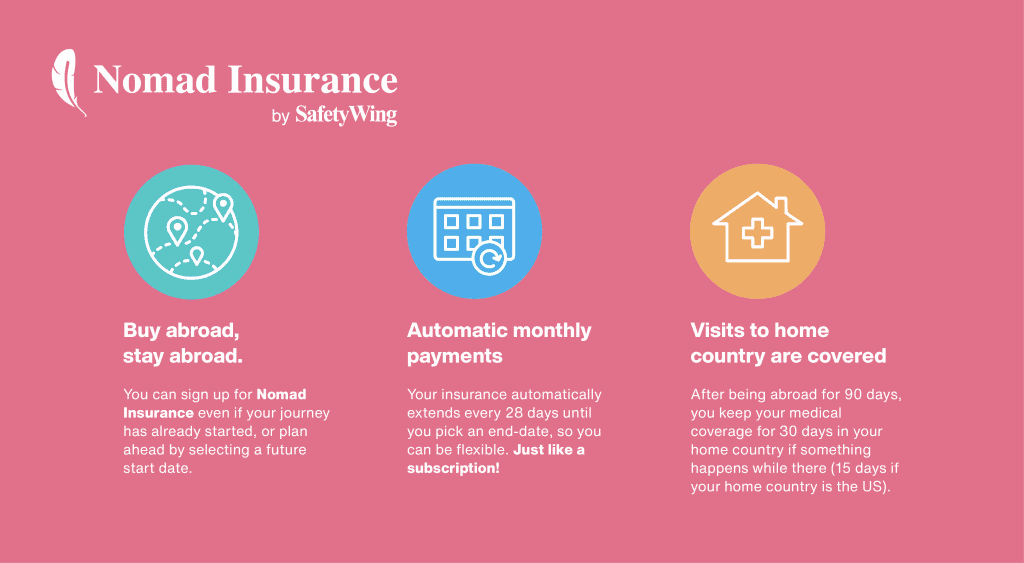
I have used a few different emergency medical providers throughout my travels, but my favourite is Safety Wing. Safety Wing specializes in nomad health insurance, has multiple packages to fit your needs, and is super easy to sign-up, pause, and cancel your insurance. Check it out below!

5. Not Negotiating Your Travel Nurse Contract
Another common travel nurse financial mistake is accepting the first pay package offered – never ever do this!!!
Travel nurse compensation is way more negotiable than you may think. I have successfully negotiated for thousands more in every one of my contracts, as well as other perks including:
- Block scheduling
- Completion bonuses
- Higher overtime rates
- Relocation reimbursement
- Fully maximized tax-free stipends
To learn how to make more money as a travel nurse, check out my Full Guide on How to Negotiate Travel Nurse Pay.
6. Housing Arbitrage & Tax-Free Stipends
Travel nurses receive tax-free housing stipends intended to cover living expenses while working away from home. Because these stipends aren’t taxed, they significantly increase your take-home pay!
Many nurses maximize this by using housing arbitrage – finding housing that costs less than the stipend and keeping the difference. For example, if your stipend is $5,000 per month and your rent is $2,000, you keep the remaining $3,000 (completely tax free!).
A rule of thumb that I personally use, is that one week of total travel nurse pay should roughly cover one month of rent. So if your weekly take home total is $2,000, your monthly rent should be less than or equal to $2,000.
There are few other jobs that have this lucrative of a tax-free pay – a huge perk of travel nursing!

How These Travel Nurse Financial Mistakes Add Up
Let’s say a travel nurse makes just a few of these money mistakes:
- $2,000 lost to poor currency exchange
- $4,000 missed on 401(k) employer match
- $3,000 lost on unnecessary benefits
That equals to $9,000 USD lost in one year alone!
Frequently Asked Questions About Travel Nurse Finances
Do travel nurses really make more money?
Yes. Travel nurses earn more than staff nurses, but the higher pay reflects the unique nature of the job. Travel nurses temporarily leave their home to fill staffing shortages in hospitals across the country. Travel nurses duplicate living expenses because they maintain their permanent residence and tax-home while also paying for housing on their assignment. To compensate for this, travel nurse pay packages include tax-free stipends for housing, meals, and incidentals. These stipends are designed to offset the extra cost of living away from home and can significantly increase travel nurse’s overall take-home pay – especially when managed correctly.
Can travel nurses really negotiate for higher pay?
Yes. Negotiating travel nurse pay is a normal part of the industry because agencies compete to fill urgent hospital staffing needs. Experienced travel nurses, like myself, regularly negotiate $100-500 more in weekly pay, relocation and completion bonuses, and maximize tax-free income. If you want to learn how to approach these conversations with strategies that actually work, read my Full Guide on How to Negotiate Travel Nurse Pay.
Do Canadian travel nurses working in the U.S. qualify for a 401(k)?
Yes. Canadian nurses working travel contracts in the U.S. under their TN visa are eligible to contribute to a 401(k) through their agency. Contributing enough to receive your full employer match is essentiallyfree money towards your retirement and your contributions can even reduce your taxable U.S. income. Be sure to work with a cross-border professional accountant to maximize your earnings.
Are travel nurse stipends really tax-free?
Yes! As mentioned earlier, tax-free stipends exist to offset the cost of duplicating expenses. Your tax-free income as a travel nurse does not appear on any tax forms. Your W-2 (U.S. equivalent to a T4), only shows your taxed hourly rate, taxable bonuses, and deductions. For this reason, travel nurses are also in a lower tax bracket, giving them even more tax breaks.
What are the biggest money mistakes travel nurses make?
Overall, the biggest mistake is not understanding how travel nurse pay packages work and how to maximize earnings. Travel nurses lose money when they don’t negotiate pay, miss out on a 401(k), get burned on bad currency exchange rates, don’t hire a cross-border accountant, pay for benefits they don’t need, and don’t maximize their tax-free earnings.
Cross-border travel nursing offers incredible earning potential, but maximizing that income requires understanding how the system works. I hope this article helped you understand how to avoid these common travel nurse money mistakes and keep far more of your hard-earned money!