
How to Become a U.S. Travel Nurse as a Canadian RN (Step-by-Step Guide)
U.S. travel nursing for Canadian nurses may seem complicated, time-consuming, and overwhelming at first. Between licensing requirements, visas, credential verification, and navigating the U.S. healthcare system, many Canadian nurses assume the process is nearly impossible.
After five years of nomadic travel nursing and ten contracts across the United States, I can assure you the process is far more achievable than it seems.
In this step-by-step guide, I’ll walk you through how to turn your U.S. travel nurse dreams into reality!
How Canadian Nurses Can Work in the U.S.
Step 1. Pass the NCLEX & Get Experience
To become a registered nurse in Canada, you must complete your RN degree and successfully write the National Council Licensure Examination (NCLEX). The NCLEX is also the certification exam in the U.S., so luckily for us Canadians, we do not need to complete any further education or exams to travel nurse south of the border.
After passing the NCLEX and landing your first job, focus on gaining experience in your preferred specialty (ED, Med/Surg, L&D, ICU, etc). Most hospitals require at least two years of experience in your specialty. This is because travel nurses are expected to hit the ground running with minimal orientation.
Typical unit orientation consists of one to two shadow shifts on the floor; however, my current contract only gave me two hours before I was on my own! Hence, the importance of feeling completely confident and self-proficient in your knowledge and skills. Here are some ways that helped me get there:
- Precept nursing students
- Work as a charge nurse (this makes your resume stand out, too!)
- Keep up with annual continuing education
- Ask a ton of questions
Step 2. Apply for a VisaScreen
The Commission on Graduates of Foreign Nursing Schools (CGFNS) is a screening program for healthcare professionals who are not U.S. citizens and are seeking an occupational visa to work in America. CGFNS works with TruMerit, a credential verification service, to issue VisaScreens certificates to foreign-educated nurses. Visit the TruMerit Website for more information on how to apply for your Visa Screen through CGFNS. The steps are outlined below:
- Purchase the VisaScreen: Visa Credentials Assessment ($540 USD)
- Create an account on the CGFNS Connect Applicant Portal and complete your profile
- Upload the required documents including:
- Secondary School Information: upload a photocopy of your high school diploma. This requirement is waived if you completed high school more than ten years ago. Hard to believe I fall into that category now…
- Professional Education Information: CGFNS will need to receive a complete academic record directly from the educational institution in which you completed your nursing degree. Reach out to your University’s Human Resources/Administration to have them send your Transcript Validation Form to CGFNS. Most schools will charge a fee for this service – for reference, the University of Regina charged me $300.
- Proof of passed NCLEX & License Validation Form: contact your initial provincial licensing association to request your proof of NCLEX-RN completion and license validation to be sent to CGFNS. Again, most provinces will charge for this service; in Saskatchewan, I paid the CRNS $52 for these forms to be sent off.
- Passport-like Photo: take and upload this photo yourself. Ensure the photo is taken in front of a white background, from the shoulders up, with a neutral facial expression.
Once you have uploaded all the required documentation and had your school and licensing body send in your forms, you simply wait.
Processing time can take months, so plan accordingly and apply for your VisaScreen long before you intend to start your travel nursing journey. When your application is approved, you will receive a digital VisaScreen certificate that will be valid for five years.
Step 3. Connect with a Recruiter (Who Specializes in Canadian Nurses Working in the U.S.)
Finding a trustworthy recruiter and a reputable travel nursing company is essential for your success.
There are thousands of healthcare recruiting companies in the U.S., creating a competitive and often confusing system for first-time travel nurses. Working with a recruiter who understands the specific needs and challenges of Canadian RNs transitioning to the U.S. can make a significant difference.
I recommend connecting with your recruiter early on as they can provide guidance on licensing and visa requirements and support you throughout the entire process.
After working with several recruiters and multiple companies, I can confidently recommend recruiters who are qualified in assisting Canadian nurses. I’d be happy to connect you to a dependable, experienced recruiter from Medical Solutions – just send me a DM on instagram or email me at travelrnken365@gmail.com.
Medical Solutions has been instrumental in my travel nursing journey and can ensure a smooth transition for you as well. In addition to personalized recruiter support and access to thousands of jobs nationwide, Medical Solutions provides industry-leading benefits. Such perks include:
- 401(k) matching
- license and uniform reimbursements
- loyalty bonuses
- discount codes for hotels, rental cars, and retail stores for clinicians.

4. Apply for a State Nursing License
While you’re waiting for your VisaScreen certificate to be issued, you can apply for a state license. Each state has its own licensing requirements, and only a handful of states allow you to apply without a Social Security Number (SSN).
Canadian Social Insurance Numbers (SIN) are not interchangeable nor recognized in the U.S. You can obtain an SSN once you are working in the U.S., and from then on you can apply to all U.S. states. But remember, for your first travel nursing contract, you must choose a state that allows non-SSN-holders to apply.
These states include Arizona, New York, Florida, Maine, North Carolina, Connecticut, Minnesota, Wisconsin, Virginia, Idaho, Texas, Colorado, Illinois, Oregon, and others. Many of these states will have you sign an SSN Affidavit Form, essentially stating that you do not currently have an SSN but are qualified to get one once you’re on U.S. soil.
Be sure to work with your recruiter to help you navigate your state licensure process, as it largely varies from state to state. Most agencies reimburse you for your state license fees once you work there – typically on your second week’s paystub.
Pro-tip: Many states require an American (USD) credit card to purchase your nursing application online. A way around this is to buy a prepaid Joker Mastercard, which you can find at Shoppers or other retail stores. Be sure to load it with enough CAD to cover the USD conversion.
5. Complete your American BLS & ACLS
Unfortunately, the U.S. does not recognize Basic Life Support (BLS) and Advanced Cardiovascular Life Support (ACLS) certificates obtained in Canada. Follow the steps below to obtain your American BLS and ACLS cards:
- Visit the American Heart Association (AHA) Website: purchase and complete the online portions of BLS and ACLS. Heartcode BLS costs $36 USD and Heartcode ACLS costs $168 USD. Although ACLS is not a job requirement for every position, I strongly recommend completing it to strengthen your skills and resume.
- Work through the Online Course: once completed, you will receive a certificate of online course completion. From there, you must attend a hands-on session to get your AHA BLS and ACLS provider cards.
- Book Your Hands-on Session: through the AHA website, however being in Canada, it is possible to complete this portion of the course virtually over FaceTime or Zoom. Your recruiter can help you arrange this.
6. Update your Resume
I could go on and on about the importance of having a captivating resume to make you stand out from other candidates. In fact, I have a full blog post on How to Write the Perfect Travel Nurse Resume, detailing important areas of focus and formatting strategies to help you land your dream travel nurse job.

7. Apply for U.S. Travel Nurse Positions
Once you have completed steps 1-6, with your CGFNS and state license active, you may begin your job search.
A good first step is to visit the Vivian website to scout out available jobs – be sure to narrow in on your specialty, location, and preferred shift. Vivian aggregates job postings from multiple agencies into one searchable database. This makes it a convenient search tool, but keep in mind that it has a reputation for posting inaccurate rates and advertising positions that have already been filled.
With that considered, I recommend using Vivian to get an idea of what the market looks like and to send your recruiter screenshots of job listings you’re interested in. On top of your own market research through Vivian, your recruiter will send you job postings that match your desired preferences.
Given the massive number of recruiting companies in the U.S., it is important to remember that each company has different relationships with hospital chains and tiered access to jobs. This means your recruiter may not have access to every job listed on Vivian. This is because some of the larger recruiting companies “own” contracts within a hospital and their travel nurses get priority over all other applicants. Hence, the importance of working with a well-established company like Medical Solutions.
Be patient during this phase… it can take weeks to months of submitting to jobs before landing one. Don’t get discouraged, keep applying, and consider being flexible when it comes to shift time or location (maybe you’d consider working night shift or going to a more rural location).
Getting your first job will be the most difficult, but after that it will only get easier!
Side Note – unlike Canada, U.S. nurses work straight day shifts or night shifts… very rarely would your schedule rotate between days and nights. This is game-changing for burnout!
Pro Tip – I’m sure you’ve heard it is beneficial to work with multiple recruiters from different companies during the job search phase to “widen your net”, however, for your first contract keep it simple and work with one good recruiter – you already have enough on your plate!
8. Nail Your Travel Nurse Interview
Once you’ve been submitted to jobs, be prepared for a phone interview from a hiring HR employee or a manager. In my experience, phone interviews have been quite informal, but it is still helpful to prepare.
For more information on what to expect, read how to prepare for travel nursing interviews. If your interview goes well and the facility is interested in hiring you, they will reach out to your recruiter, who will then send you a letter of offer.
9. Sign a Travel Nurse Contract
Once you receive a letter of offer, look over it very carefully before signing.
Ensure your requested days off are included in the contract, and verify that all contract details are correct. Read the fine print about the facility’s canceled shift and/or contract policy (36 hours in a 13-week contract is standard).
Double-check that the weekly pay matches what you discussed with your recruiter, especially if you negotiated your travel nurse pay!
This is a time to really go in-depth with your recruiter to make sure you’re set up for success. Try to allow at least four weeks from signing to your start date (you’ll see why this is important later).
Once the contract is signed by both you and your company, print off a copy and get excited about your upcoming travel nursing adventure!
10. Enroll in U.S. Banking
So you can get that money, honey!
Your company will pay you weekly to a U.S. checking account in USD.
I personally love and recommend WISE. Wise allows you to hold multiple currencies, functions like a U.S. chequing account, has no foreign transaction fees, and has the best exchange rate on the market (especially compared to traditional banks). Sign up for free below!

11. Complete Pre-Employment Compliance
Okay, you thought steps 1-10 were enough, right? Well, now the real work begins.
The weeks leading up to starting your first travel nursing contract will be hectic to begin with – packing up your life, preparing to move to a new country, saying farewell to loved ones… but on top of that, you’ll need to complete these tasks:
- Company-Specific Competencies: exams, self-assessments, tax forms, and background checks.
- Hospital-Specific Competencies: exams, training modules, policy review, and forms to sign.
- Medical Compliance: your company’s compliance team will assist you in booking the following:
- Pre-employment Physical: a physician will clear you to work by signing a medical form provided by your company.
- TB Test: complete a TB skin test or a QuantiFERON-TB Gold (QFT) blood test to prove your immunity to Tuberculosis.
- Immunization Record: provide your full official vaccination record to your company. In some cases, they will require you to prove your immunity through blood tests such as TDAP and Varicella titers.
- Drug Screen: complete a urine drug test with a clinic accepted by your company. Side note – cannabis is not federally legal in the U.S. so they do test for THC in these drug screens!
- Respirator Fit Test: provide your mask fit form from within the past twelve months. In many cases, companies or hospitals may require a new one, and they will help you arrange this.
It is not uncommon for companies to only allow health items (bloodwork, drug screen, physical, fit test) to be completed on U.S. soil. If you plan it right, you could complete them en route to your first assignment, given that the results will be in before your competency completion deadline.
Another option would be to travel to the nearest U.S. city a couple of weeks before your start date to have your health items completed if that is feasible for you. Being from Regina, SK, I have driven four hours to Minot, ND to have my health testing done.
Work with your recruiter and your compliance team to find the best arrangement.
12. Prepare your U.S. Border Folder
A border folder contains all required documentation to obtain a TN Visa at the U.S. land border. This folder should contain:
- Your valid passport
- VisaScreen certificate
- Original high school and university diplomas
- Signed contract
- Resume
- Support letter from your company explaining:
- job duties
- contract details
- start date
13. Attain TN Visa
With your border folder in hand and your vehicle packed to the brim with your belongings, you can now make your way to a U.S. land border to get your TN Visa.
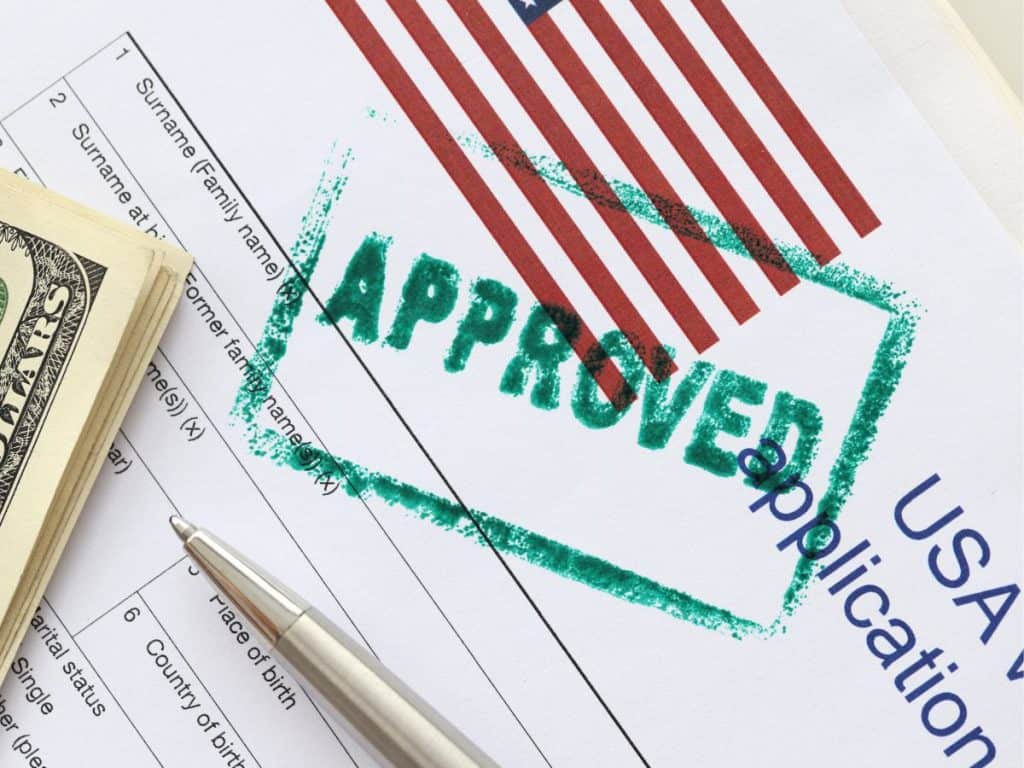
Present your passport and border folder to the officer; they will have questions and paperwork for you, along with a TN visa application fee ($ 50-100 USD) and an I-94 fee ($30 USD). Once approved, they will stamp your passport and give you a unique I-94 number. You can use your I-94 number to apply for your SSN.
Your TN Work Visa will be with your recruiting company, so if you ever change companies, you must apply for a new TN Visa. A TN Visa can be granted for up to three years and renewed indefinitely as long as you maintain a qualifying job offer as a registered nurse.
You can only cross the border/obtain a TN Visa ten days prior to your assignment start date. Not all border crossings offer TN Visa services, so be sure to Google it beforehand.
14. Apply for a SSN
At this point, you will be in the U.S., with a TN Visa, and a job lined up – yay! The next step is to apply for your Social Security Number (SSN):
- Visit an SSA Office: take your passport, TN visa, I-94, employment letter, and proof of identity (birth certificate, driver’s license) to the nearest Social Security Administration (SSA) building.
- Complete Form SS-5: download this form from the SSA website or complete it at the SSA office.
- Receive your SSN: you will receive your SSN card by mail, which typically takes a couple of weeks. For this reason, I recommend applying for your SSN as soon as possible after crossing the border.
15. Settle Into Your New Home and Travel Nursing Job!
With all that paperwork and stress in the rearview, you can now shift your focus to starting a new job and settling into your new temporary home.
If this is your first travel nursing contract, expect your start date to be pushed back. This is due to waiting for your health screening results and your SSN to be activated. Although it feels scary having your start date pushed, remember that you have a signed contract with the facility and they are just as eager to get you on the floor as you are.
While waiting to start, keep in close communication with your recruiter and go out to explore your new surroundings!
Expect first-day instructions to be emailed to you by your manager or hospital administrative team about a week before your start date. Read more here to prepare for your first week as a travel nurse.
Frequently Asked Questions About Canadian Nurses Working in the U.S.
How much money do Canadian travel nurses make?
One of the biggest motivations for Canadian nurses working in the U.S. is significantly higher pay. Depending on specialty, location, and contract demand, travel nurses can earn between $2,000–$4,000+ USD per week, often with a large portion paid as tax-free stipends for housing and meals. There is also room to negotiate travel nurse pay for even higher earnings.
Can Canadian nurses work in any U.S. state?
Canadian travel nurses can work in most U.S. states, but they must first obtain a state nursing license for the state where they plan to work. For your first contract, you’ll need to apply to a state that allows nurses to obtain a license without a Social Security Number (SSN). Once you begin working in the U.S. and receive your SSN, applying for additional state licenses becomes much easier.
How much does it cost to become a U.S. travel nurse as a Canadian?
The cost to become a U.S. travel nurse varies slightly depending on the state you apply to and how quickly you complete the process, but most Canadian nurses spend roughly $1,000–$1,800 USD ($1,400–$2,500 CAD) to get everything set up.
Here’s a breakdown of the most common costs:
| Requirement | Typical Cost |
|---|---|
| VisaScreen credential assessment (CGFNS / TruMerit) | ~$485–$540 USD |
| U.S. state nursing license application | ~$150–$400 USD |
| TN Visa at the border | ~$50 USD |
| I-94 entry record | ~$30 USD |
| American BLS certification | ~$36 USD |
| American ACLS certification | ~$168 USD |
| University transcript processing fees | ~$100–$300 USD |
| Provincial nursing license verification | ~$50–$200 USD |
The VisaScreen credential assessment alone costs about $540 USD, which verifies your education, nursing license, and credentials for U.S. immigration purposes.
When you cross the border to begin your assignment, Canadian nurses applying for a TN visa typically pay about $50 for processing plus a $30 I-94 fee, making the visa itself relatively inexpensive.
The remaining costs usually come from state nursing license applications, certifications, and document processing, though many travel nurse agencies reimburse these expenses after you begin your contract.
Considering many U.S. travel nurse contracts pay $2,000–$4,000 per week, most nurses recover these initial costs within their first paycheque!
Do Canadian nurses need a visa to work in the U.S.?
Yes. Canadian nurses work under a TN visa, which allows qualified professionals to work in the United States for up to three years with a valid job offer, and can be renewed indefinitely. Steps to apply for a TN visa are listed above in this article.
How long does it take to become a U.S. travel nurse from Canada?
The process typically takes 6-9 months depending on VisaScreen processing times and state licensing. Starting early and working with an experienced recruiter can speed up the process.
Do Canadian nurses need to rewrite the NCLEX to work in the U.S.?
No. Canadian nurses who have already passed the NCLEX-RN do not need to rewrite the exam to work in the United States. The NCLEX is the licensing exam used in both Canada and the U.S., so Canadian nurses simply need to apply for a U.S. state nursing license and complete credential verification through VisaScreen. This makes the transition much easier than many nurses expect.
Can Canadian nurses work in the United States?
Yes – Canadian RNs can legally work in the United States. Before you get there though, there are a few hoops to jump through like obtaining a VisaScreen certificate, getting a TN visa, applying for a state license, and securing a travel nursing contract. If you’ve read this guide, you already know the exact steps to make it happen!
With the right preparation and support, the path to working as a travel nurse in the United States is entirely achievable. Take the process one step at a time, stay patient through the paperwork, and lean on experienced recruiters when needed. Before you know it, you’ll be packing your bags, crossing the border, and starting your first travel nursing adventure!
Next Steps After a Landing Your First U.S. Travel Nurse Contract
- How to Write the Perfect Travel Nurse Resume – learn how to create an ATS-friendly resume helps you land interviews faster
- Travel Nurse Interview Tips: How to Land Your Dream Job – prepare for common travel nurse interview questions and stand out to hiring managers
- Your First Week as a Travel Nurse: Orientation & Survival Tips – what to expect during orientation and set yourself up for a successful contract
- How to Negotiate Travel Nurse Pay to Earn Thousands More – learn proven strategies to increase your weekly pay, maximize stipends, and get bonuses
- Financial Mistakes to Avoid as a Travel Nurse – avoid these common money mistakes that cost travel nurses thousands